
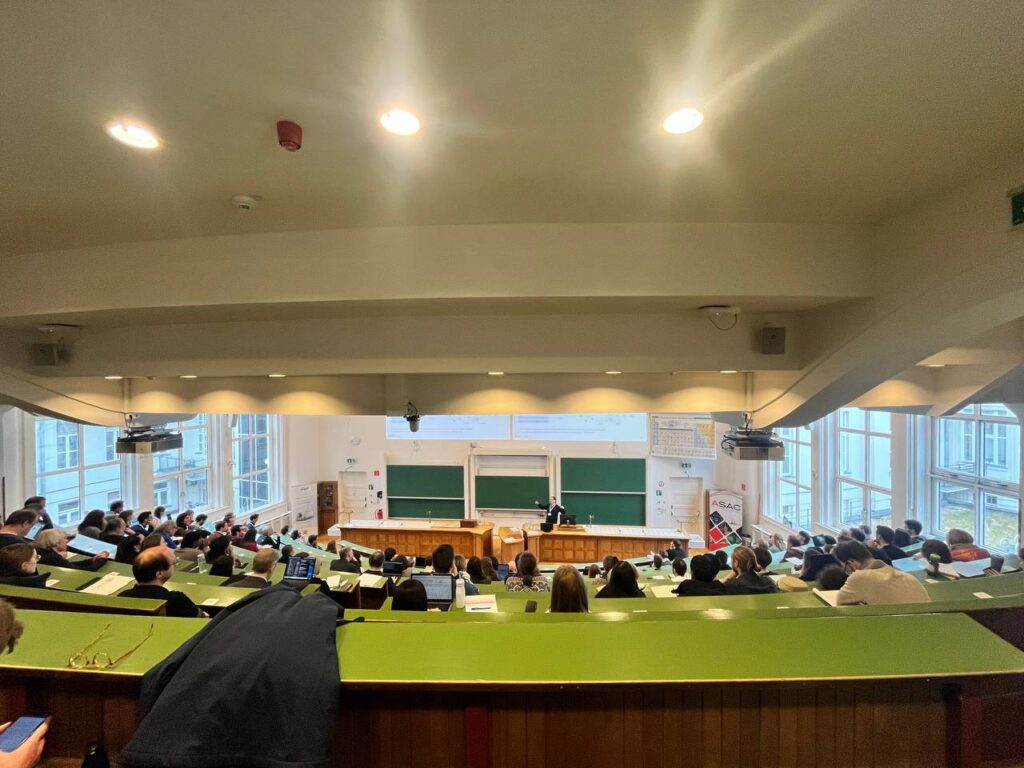
On February 18-19, researchers from across disciplines gathered for MassSpec Forum 2026 at the University of Vienna, a two-day scientific event dedicated to advances in mass spectrometry and its diverse applications, from forensic molecular fingerprinting to clinical diagnostics and environmental analysis. The forum once again highlighted how analytical sciences enable us to “explore the invisible,” uncovering molecular details that shape biology, health, and the environment.
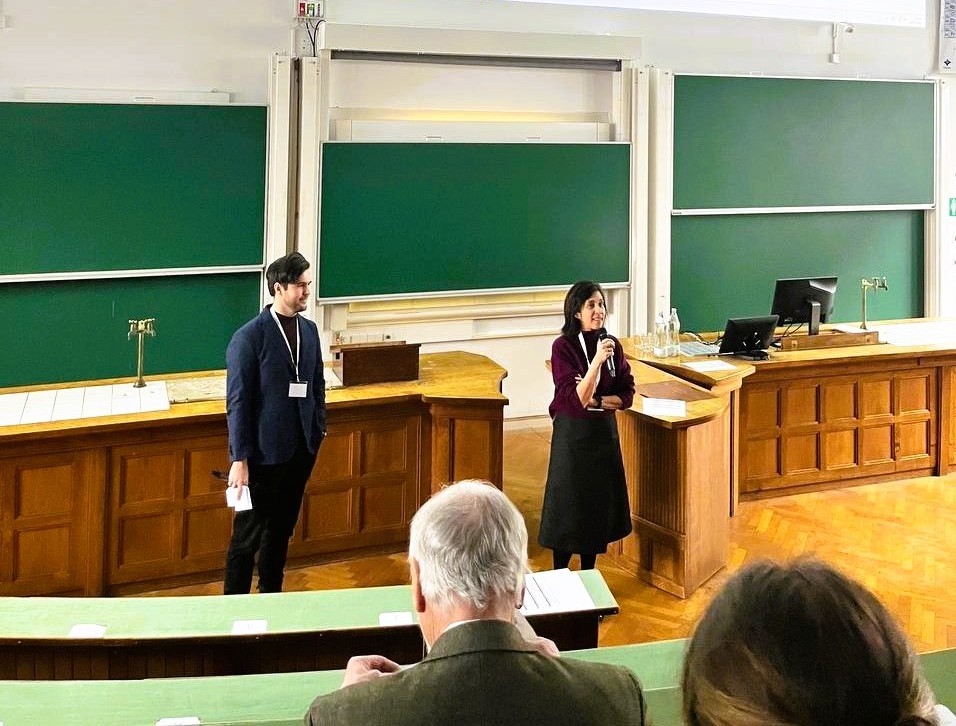
Gunda Koellensperger, a key researcher in the Cluster of Excellence Circular Bioengineering, served as Chairperson of the forum, guiding discussions across a broad and forward-looking scientific program.
A Diverse and Impact-Driven Scientific Program
The event covered a wide spectrum of topics, demonstrating the versatility and societal relevance of modern mass spectrometry:
🔹Forensic opportunities through molecular fingerprinting
🔹Mercury detoxification in whales and environmental implications
🔹Targeted quantification of the lysosomal proteome
🔹Democratizing untargeted metabolomics
🔹Advances and challenges in atmospheric pressure ion sources
🔹Non-invasive sampling approaches for clinical diagnostics
Across these sessions, one theme became clear: mass spectrometry is not just a technical method; it is an enabling technology for solving complex biological, environmental, and clinical challenges.
Advancing Structural Identification:
Dr. Müller’s Contribution
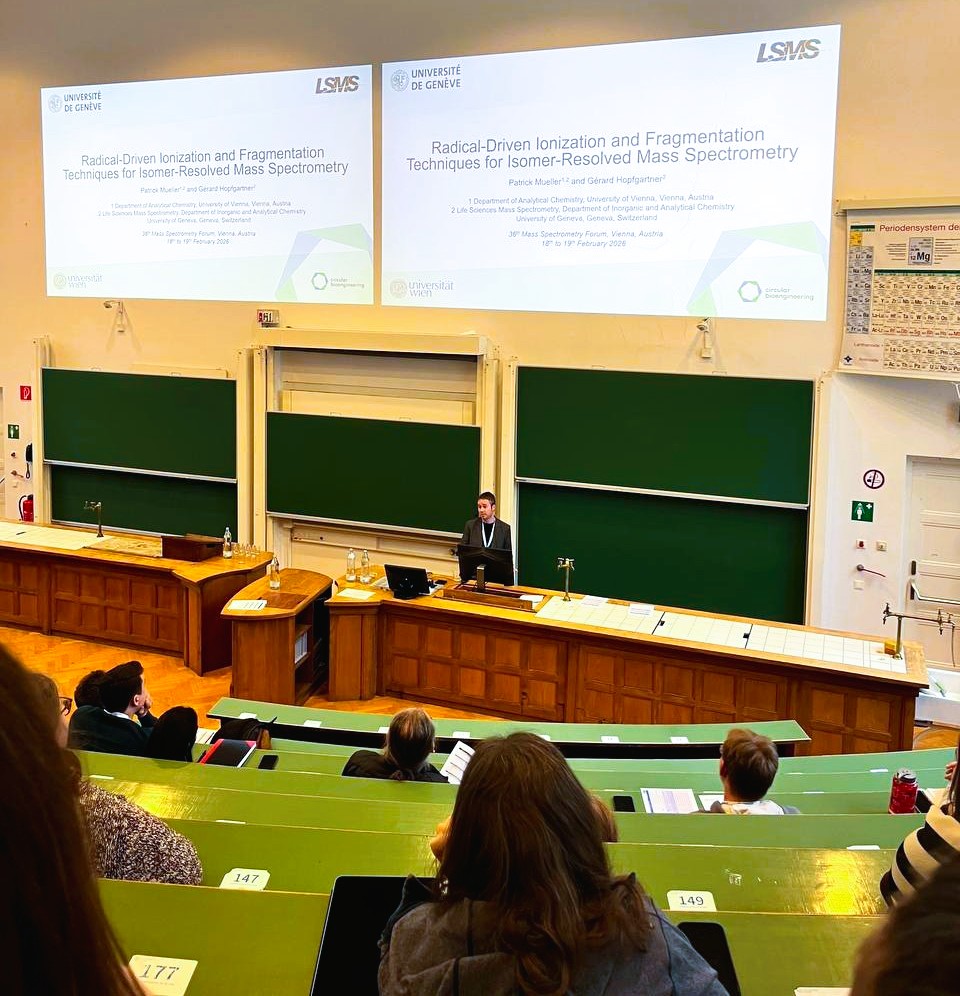
A highlight of the forum was the presentation by Patrick Müller, a postdoctoral researcher within the Cluster of Excellence Circular Bioengineering, who showcased an innovative approach to improving structural identification in LC-MS workflows.
The Challenge: Isomeric Molecules
While modern liquid chromatography-mass spectrometry (LC-MS) performs excellently for many compounds, it often struggles to clearly distinguish between isomers, molecules that share the same mass but differ slightly in structure. These subtle differences can be crucial, particularly in:
- Lipid analysis
- Steroid differentiation
- Forensic investigations (e.g., distinguishing THC from CBD)
- Consumer product safety
The Innovation: Atmospheric Pressure Photoionization (APPI)
Dr. Müller’s work demonstrates that APPI provides a powerful alternative to conventional electrospray ionization.
Unlike electrospray, APPI generates radical cations, which fragment in a uniquely informative way during tandem mass spectrometry (MS/MS). These fragmentation patterns often resemble classical electron ionization (EI) spectra, allowing researchers to leverage established EI spectral libraries and in-silico tools within LC-MS workflows.
Science as a Collaborative Exchange
Beyond individual presentations, MassSpec Forum 2026 once again demonstrated the strength of the scientific community in Austria and beyond. The event fostered interdisciplinary exchange, connected fundamental research with applied challenges, and showcased how cutting-edge analytical chemistry supports innovation across sectors.
For more information about this event, visit the University of Vienna’s website.