Mining the Future with Fungi
As global competition intensifies over access to rare earth elements, critical components in batteries, renewable energy systems, and advanced electronics, researchers at the forefront of circular bioengineering are exploring an unexpected ally: fungi.
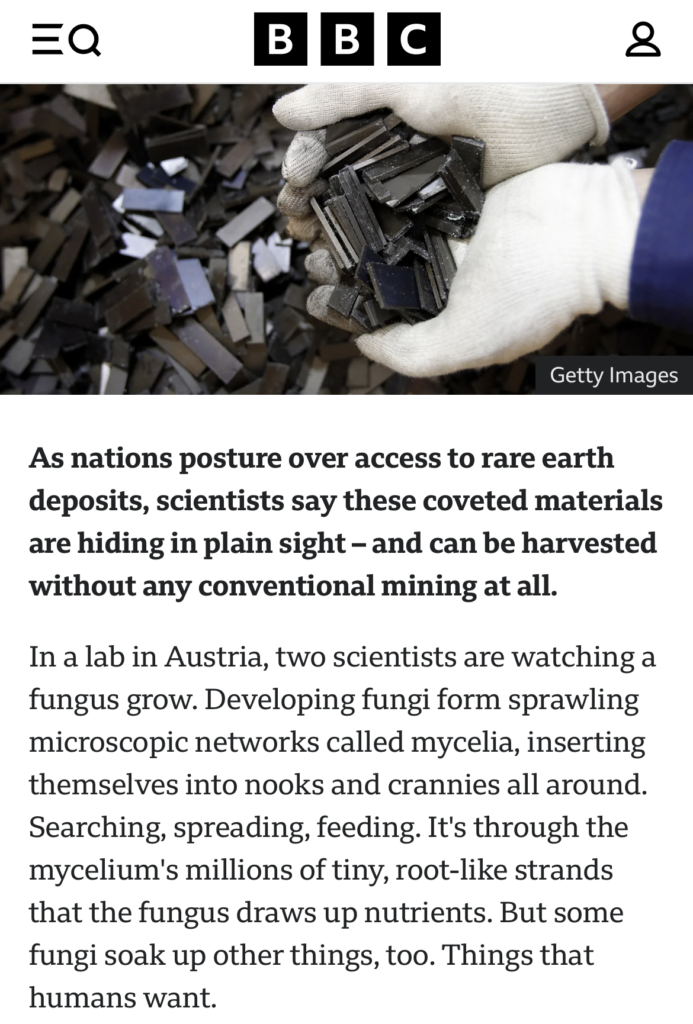
Professor Alexander Bismarck, a key researcher in the Circular Bioengineering Cluster of Excellence, and postdoctoral researcher Mitchell Jones have recently gained international attention for their pioneering work on fungi-based resource recovery, also known as mycomining. Their research was featured by the BBC, bringing global visibility to an approach that could help transform how societies source critical raw materials.
Rethinking Resource Scarcity
Rare earth elements are not truly rare in terms of their presence in the Earth’s crust, but they are rarely found in concentrations high enough to be easily extracted. Conventional mining is often energy-intensive, environmentally damaging, and geopolitically sensitive. With global demand rising, researchers are increasingly looking for sustainable alternatives.
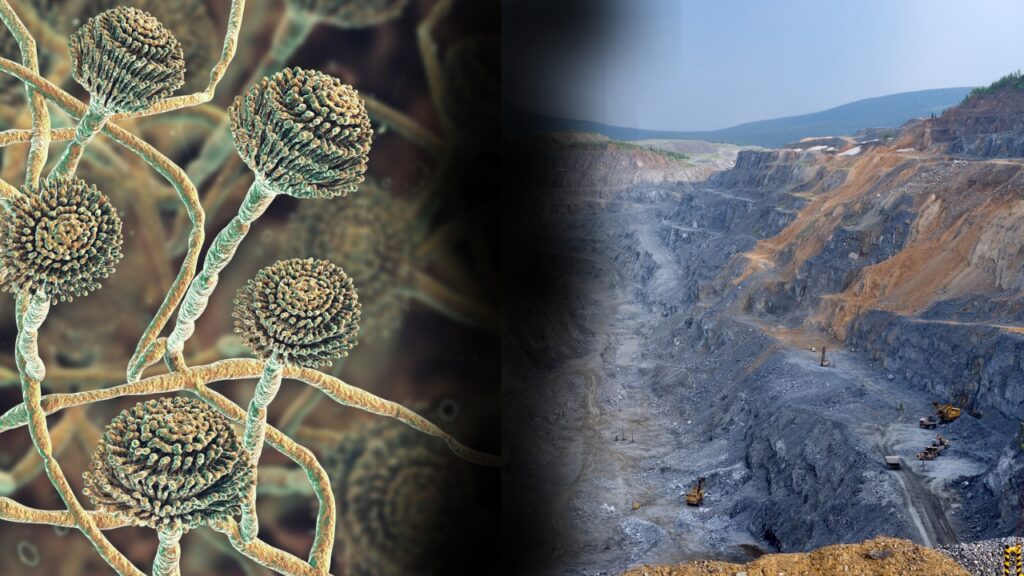
Prof. Bismarck and Dr. Jones are investigating whether fungi can serve as natural extractors of rare earth elements. In their laboratory experiments at the University of Vienna, fungi are cultivated on clay substrates deliberately enriched with rare earth elements. As the fungi grow, their mycelial networks, microscopic, root-like filaments, spread through the material, absorbing nutrients and, potentially, valuable metals.
“You might be able to recover resources,” Bismarck explains, pointing to the possibility of using biological systems instead of mechanical excavation and chemical processing.
A Circular Vision
The work aligns closely with the principles of circular bioengineering: designing systems that minimize waste, regenerate natural resources, and create value from what is currently overlooked. Instead of viewing industrial residues or low-grade deposits as liabilities, mycomining reframes them as opportunities.
Their 2024 publication on mycomining laid the scientific groundwork for this emerging field, and the recent BBC coverage signals growing public and scientific interest. (Read the BBC article here)