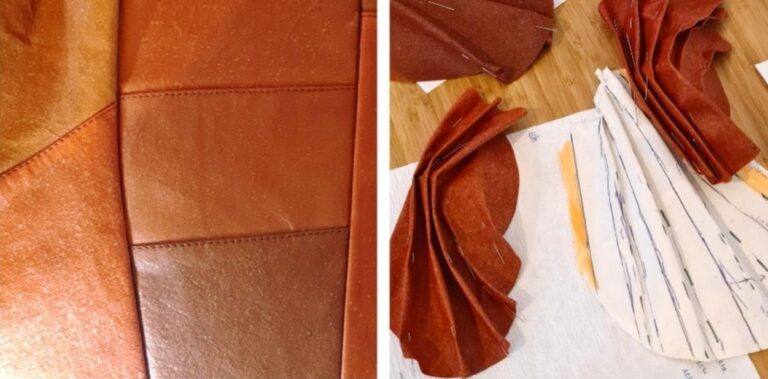
Animal leather is prized for durability and feel, but comes with enormous environmental and ethical costs. Mycelium, the fibrous root network of fungi, has emerged as a desirable alternative to leather because of its natural combination of strength, stiffness and flexibility. However, current mycelium leathers face scale and cost issues.
The new study tackles those issues by turning mushroom processing residues into sheet materials and tuning their properties with scalable techniques borrowed from papermaking. The material also handled moisture well: it behaved like cow leather at normal humidity, and a simple coating improved water repellency in damp conditions. It’s bio-based, biodegradable, and recyclable.
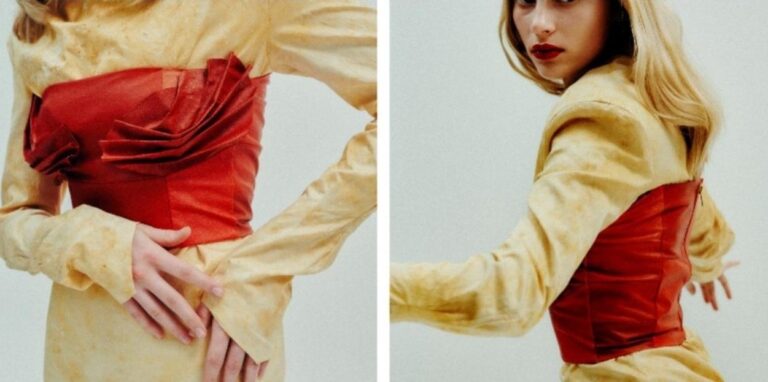
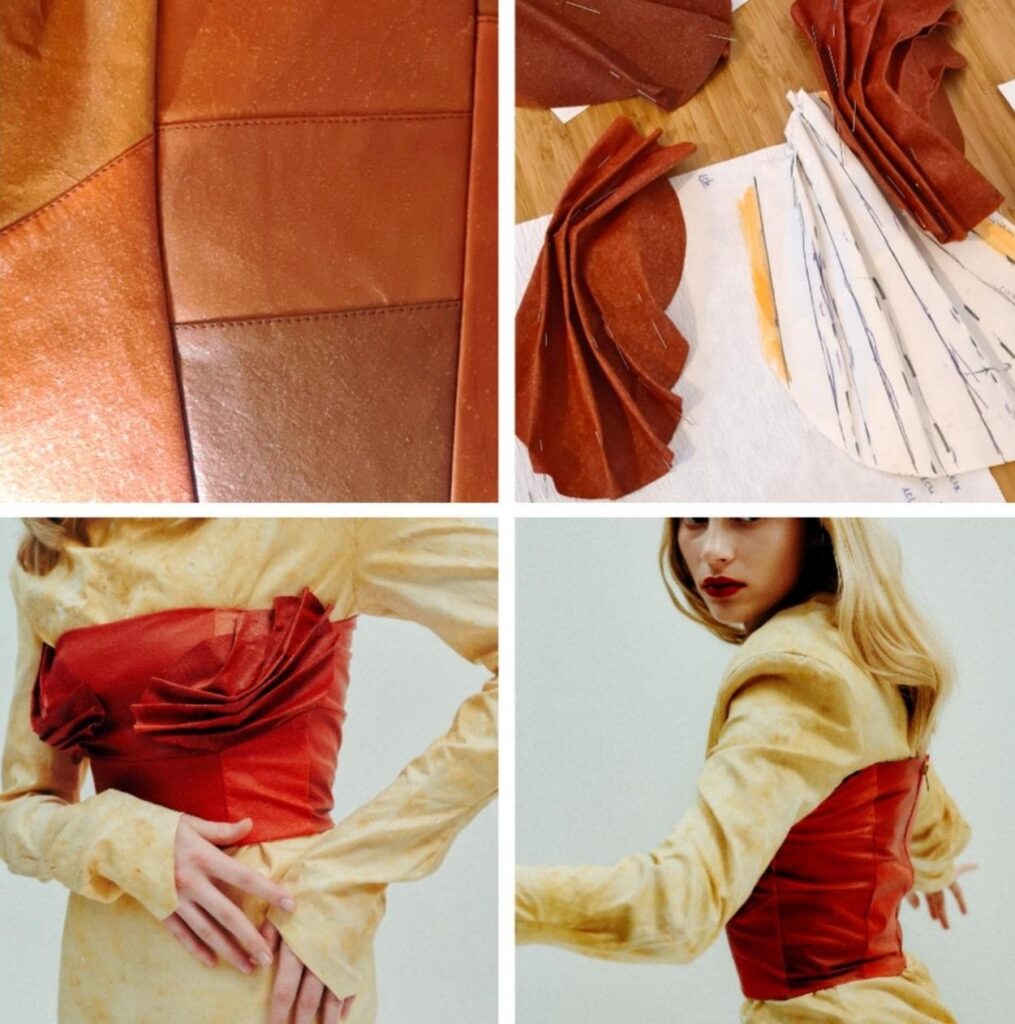
Because it uses abundant by-products and industry-ready processes, the approach aims to scale more easily than current mycelium leathers. To show real-world potential, the team created a corsage that appeared at Berlin Fashion Week (see bottom picture).
With this study, Alexander Bismarck and Mitchell Jones make a significant contribution to our research in program 1 “Green Cycles of Renewable Materials”, demonstrating the use of biodegradable materials as sustainable and equivalent alternatives in the fashion industry.